Construction estimating services
We work with clients across Australia. Each service below explains what is included, who it tends to suit and what to send us. If you are not sure which one fits, describe the project in the quote form and we will recommend a scope.
Construction cost estimating
A cost estimate prices the work shown in your documents, trade by trade, so you can see what the project is likely to cost before you tender, sign a contract or commit to a design.
What it includes
- Measured quantities for the trades in scope
- Rates for materials and labour applied to each item
- Allowances for items not fully documented, clearly flagged
- A list of inclusions, exclusions, assumptions and the drawing revisions used
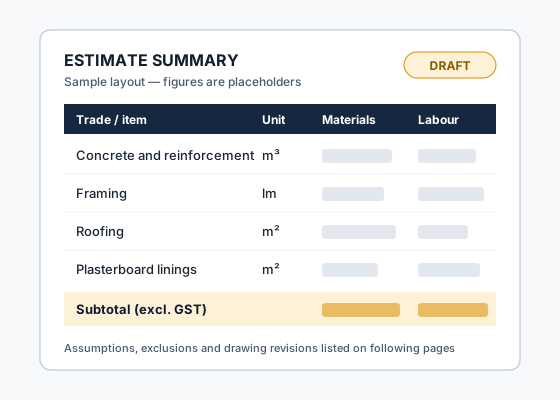
- A summary by trade, with the detailed breakdown behind it
Who it may suit
- Builders pricing a project to tender or negotiate
- Developers testing feasibility or comparing options
- Owner-builders and project managers checking a budget
What to provide
- Architectural and structural drawings
- Specifications, schedules and any engineering reports
- Tender documents or addenda, if applicable
- Your due date and preferred output format
Quantity takeoffs
A quantity takeoff measures the materials and work items shown on the drawings, without applying prices. It suits clients who have their own rates and want the counting and measuring done for them.
What it includes
- Areas, lengths, volumes and counts taken from the drawings
- Items grouped by trade, level or area, as you prefer
- Notes on anything unclear or not shown on the drawings
Who it may suit
- Builders and trades with established pricing
- Suppliers preparing material quotes
- Anyone who wants to check their own measurements
What to provide
- Scaled drawings (PDF, DWG or similar)
- The trades or items you want measured
- Your preferred units and grouping, if any
- Your due date
Trade-specific estimating
Trade estimates focus on one package of work, so a subcontractor can price their own scope without paying for a whole-of-project estimate.
What it includes
- Quantities and pricing for the nominated trade only
- Materials, labour and any plant or equipment for that trade
- Notes on interfaces with other trades and items excluded
Who it may suit
- Subcontractors responding to a builder's request for quote
- Trade businesses pricing several jobs at once
- Builders wanting a check price for a trade package
What to provide
- The drawings and specification sections for your trade
- The builder's scope of works or RFQ, if you have one
- Your own labour rates or supplier pricing, if you want them used
Tender support
Tender support provides the quantities and pricing that sit behind your submission, prepared to the tender's closing date. You keep control of your final price, margins and the submission itself.
What it includes
- Review of the tender documents and addenda in scope
- Quantities and pricing for the tendered works
- Pricing set out to suit the tender's schedule or bill of quantities, where one is provided
- A list of clarifications and assumptions you may want to include
Who it may suit
- Builders and head contractors tendering for work
- Subcontractors tendering trade packages
- Businesses with several tenders closing at once
What to provide
- The full tender package, including addenda
- The closing date and time
- Any pricing schedule you need completed
Material and labour breakdowns
A material and labour breakdown separates each cost into what you buy and what you pay crews to install. It helps when ordering, comparing supplier quotes or planning labour.
What it includes
- Material quantities, including waste allowances where noted
- Labour costs for each item
- Subtotals by trade, area or stage
Who it may suit
- Builders planning procurement and crew numbers
- Trades wanting to see where their costs sit
- Developers comparing construction methods or finishes
What to provide
- Drawings and specifications
- Preferred suppliers or labour rates, if any
- How you want the breakdown grouped
Pricing, turnaround and revisions
How pricing works
Pricing depends on the project type, size, complexity and scope of work. We review your plans before giving you a quote, so the price reflects the actual job. The main factors are:
- The type of project
- The size and complexity of the project
- How many trades are in scope
- How complete and clear the drawings and specifications are
- How soon you need the estimate
Turnaround
Most estimates are completed within 2–3 days, depending on the size and complexity of the project. We confirm the delivery date in every quote.
Revisions
Revisions are free of charge when they fall within the agreed scope of work. Changes that add new work outside that scope are quoted separately.
Request a quote for your project
Upload your drawings, choose the service you need and tell us your deadline. We will confirm the scope and send a project-specific quote.